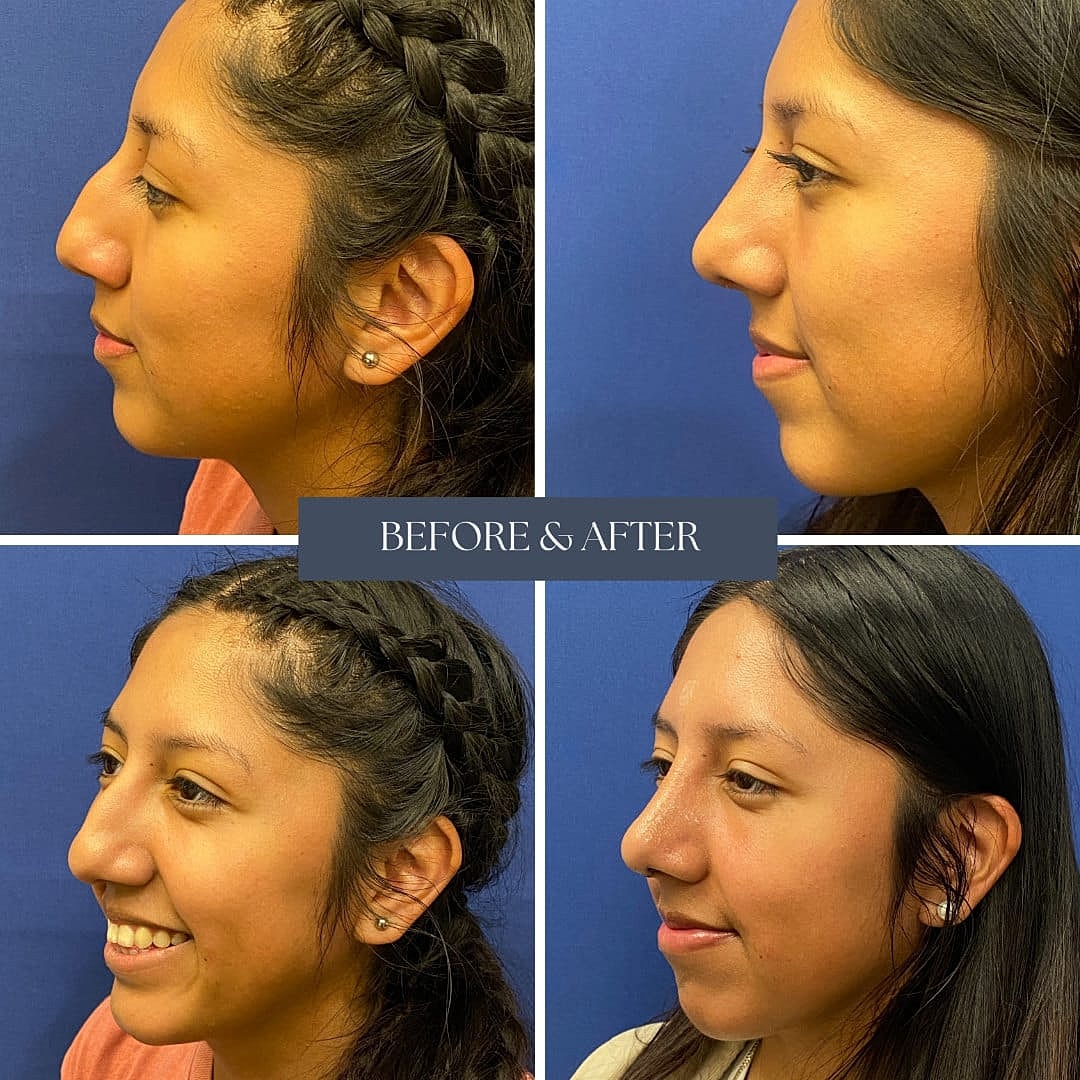
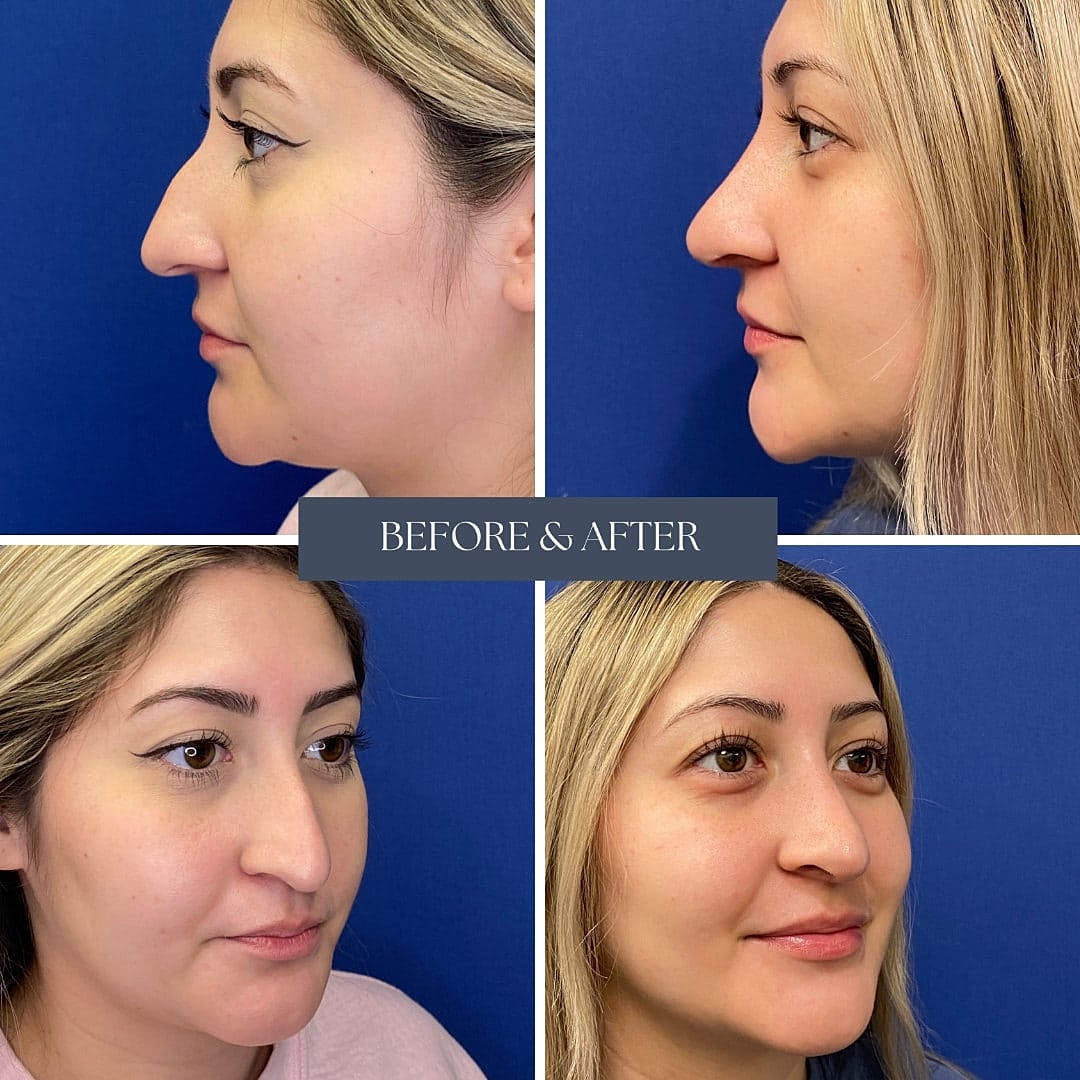
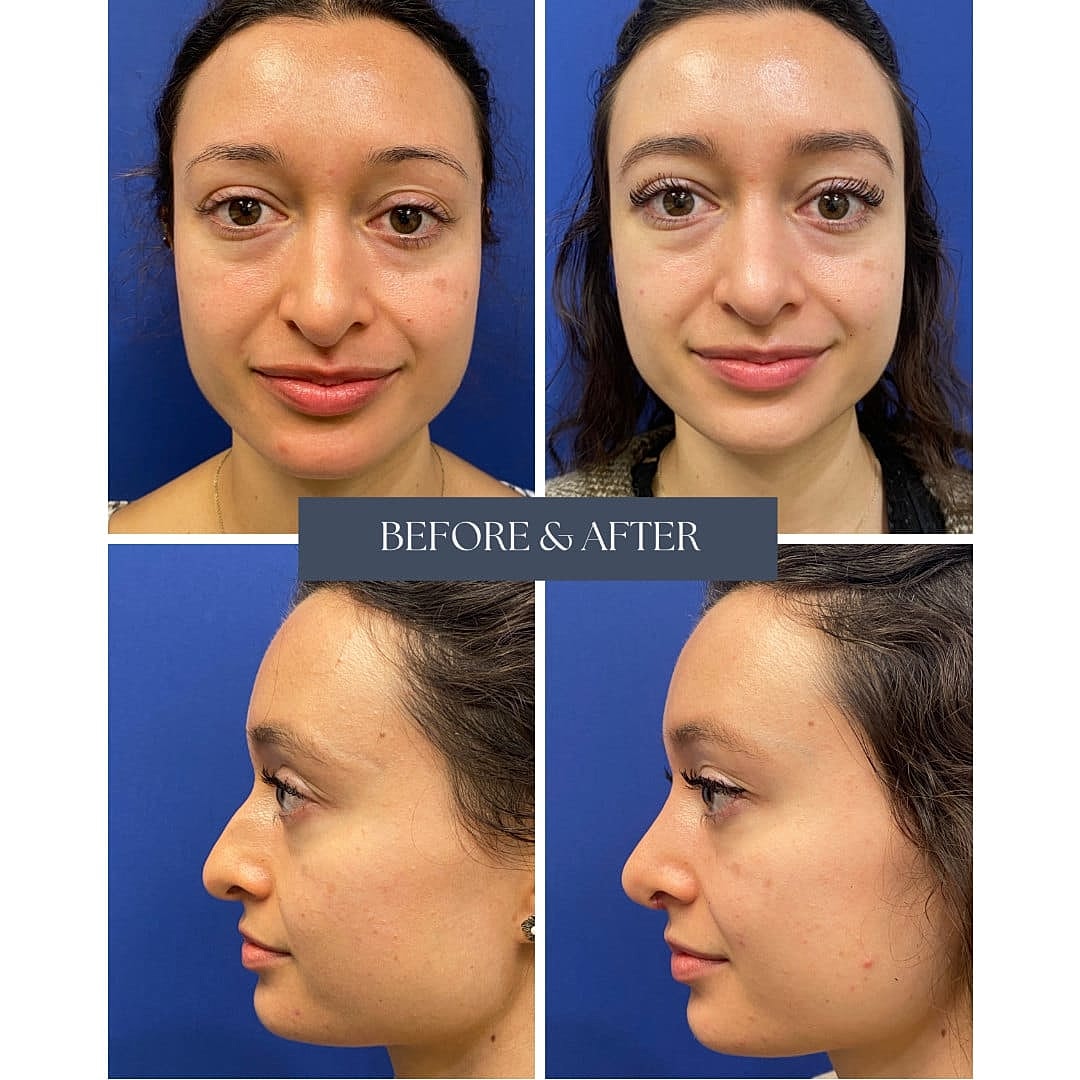
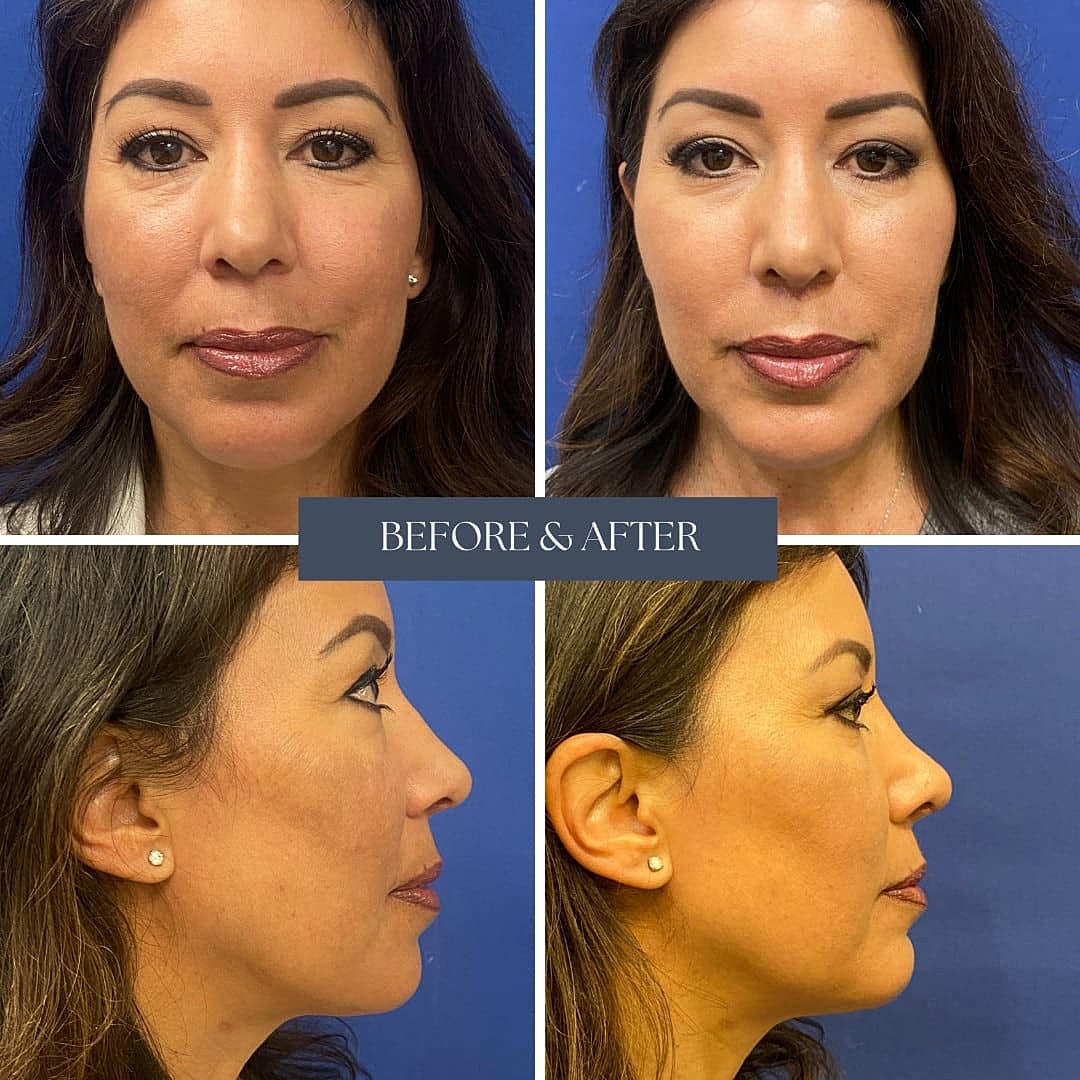
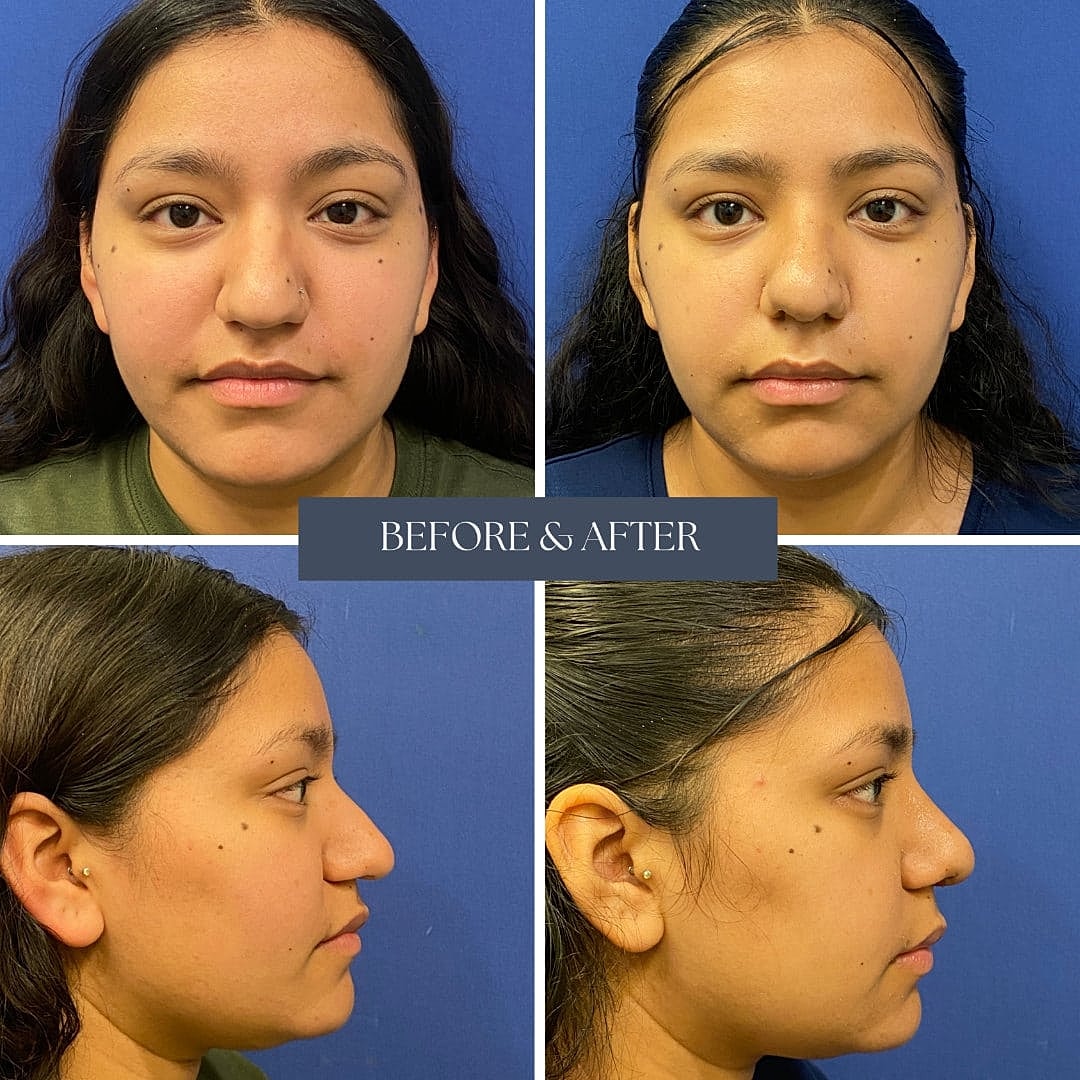
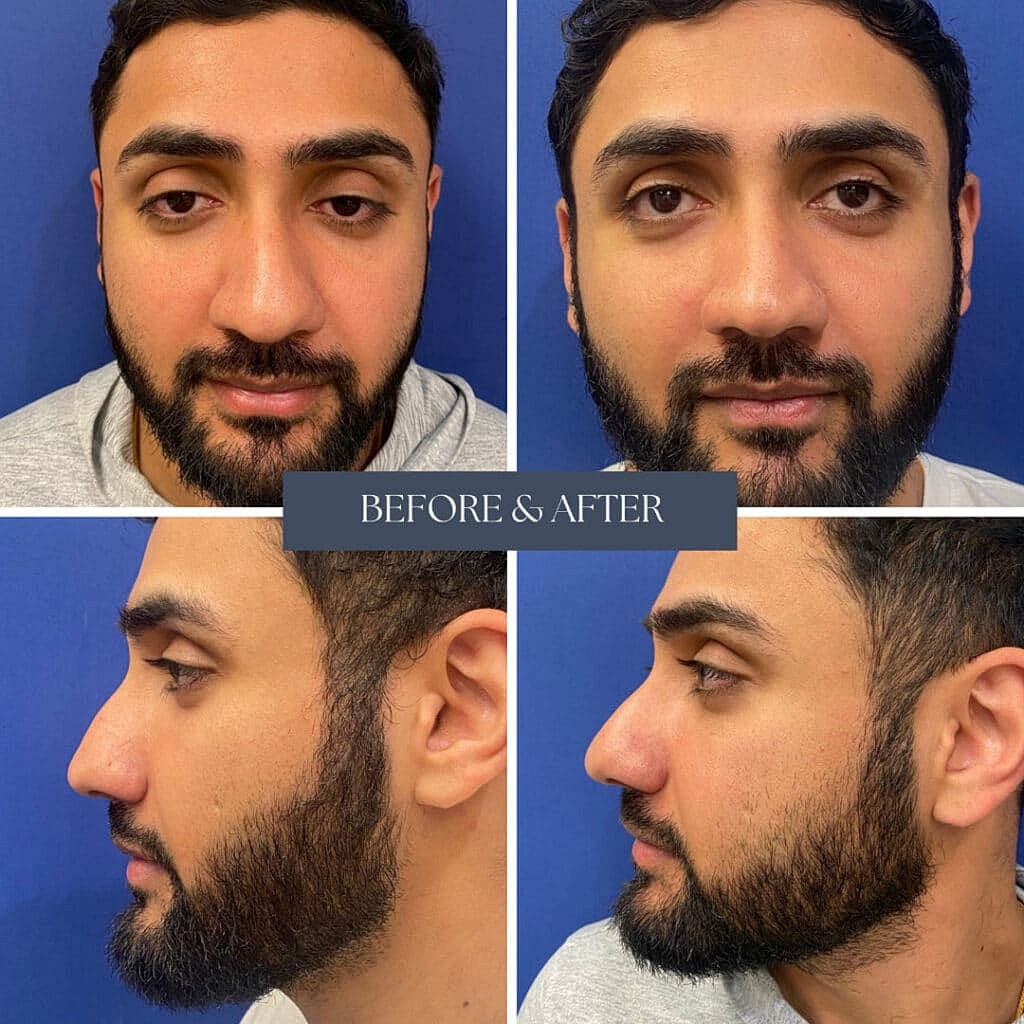
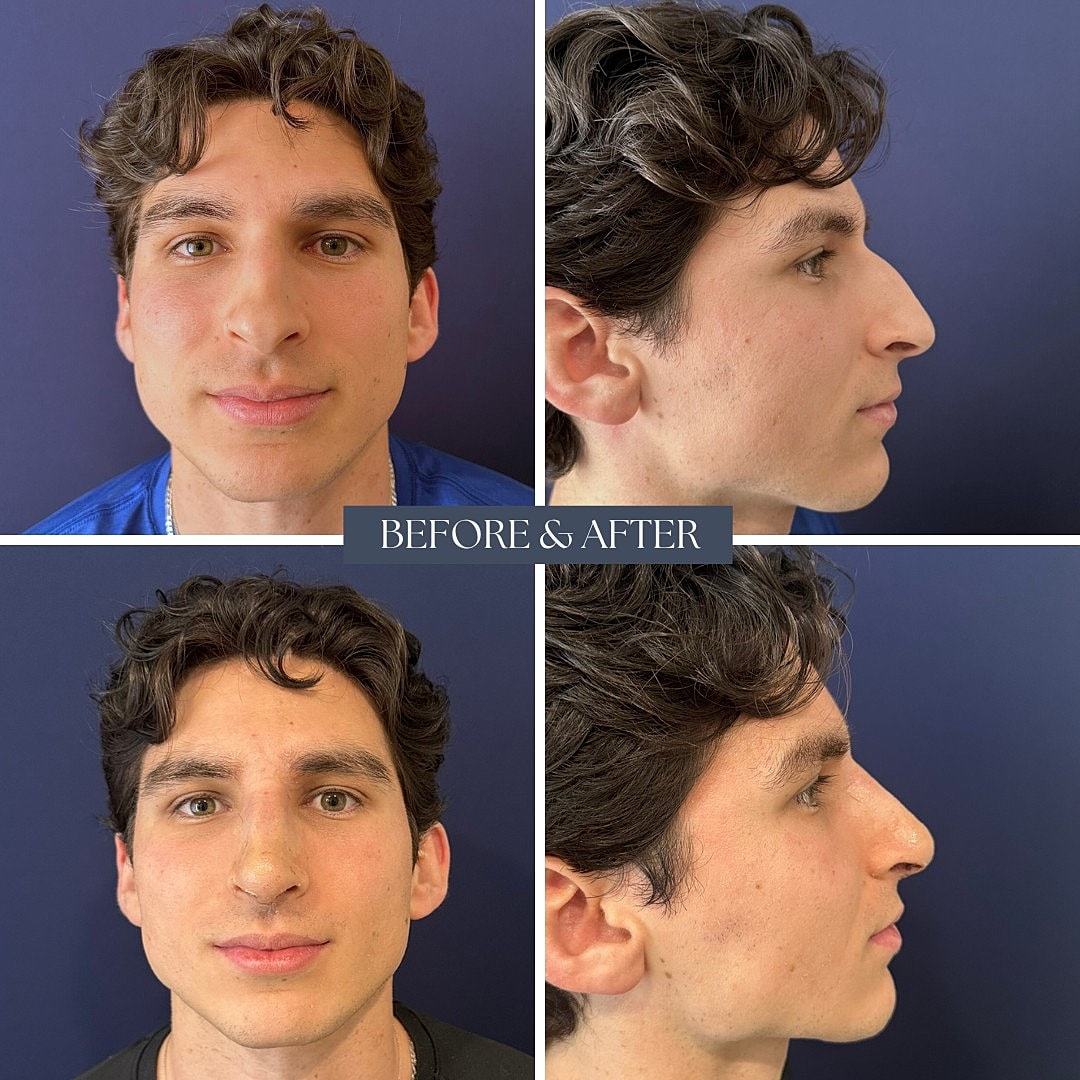
Rhinoplasty
Conveniently located in Los Angeles, Orange County, and the Inland Empire

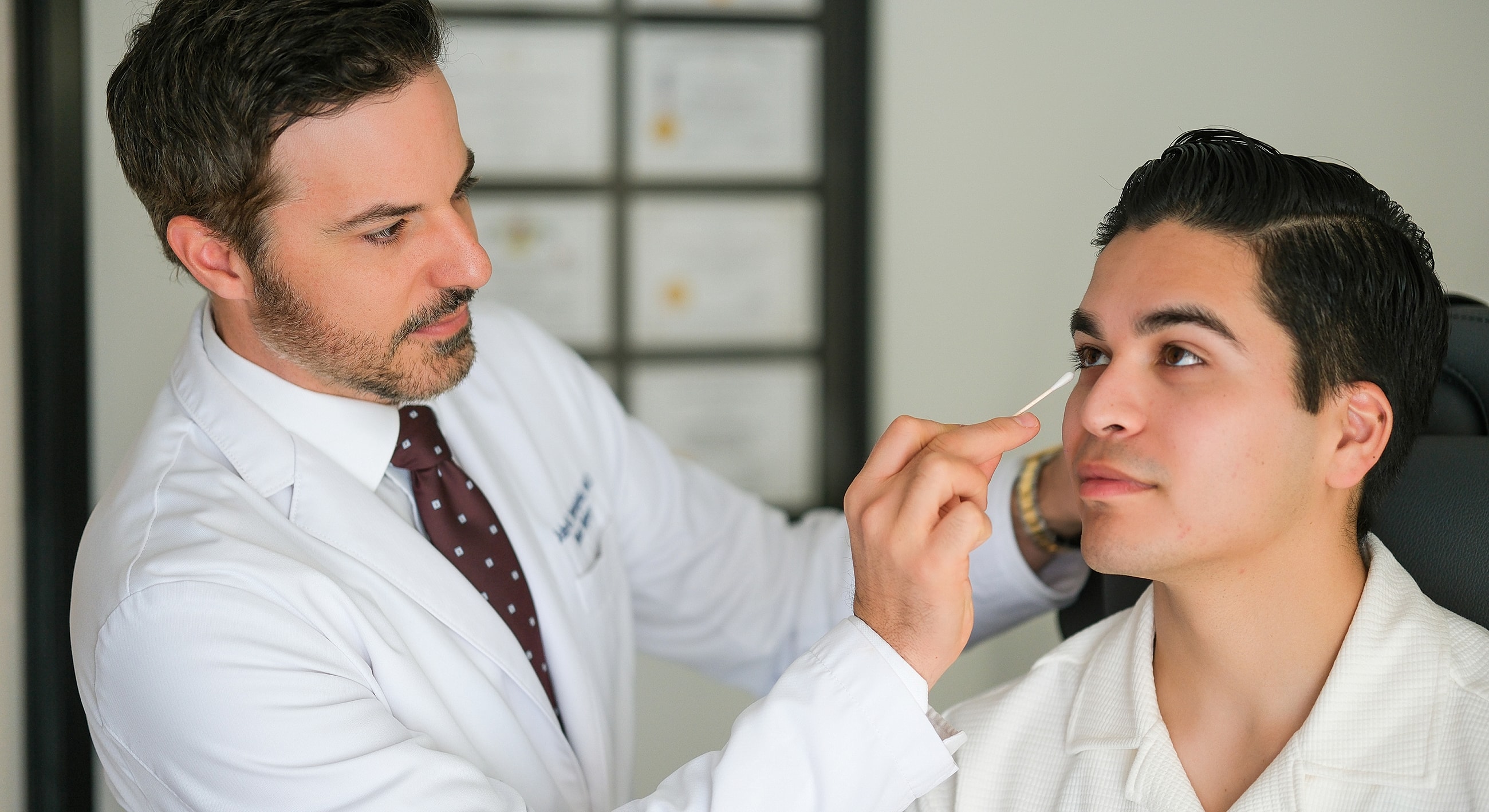
Rhinoplasty in Newport Beach is one of the more popular operations performed by plastic surgeon Dr. John Compoginis. You may have considered corrective nasal surgery if your nose is misshapen, disproportionately large or small for your face, or if you have had an injury that makes breathing difficult.
In most cases, the desired results are achieved by reshaping the cartilage and the bone. The patient’s input is always sought regarding the desired nasal change.
Rhinoplasty is one of the most nuanced procedures in plastic surgery, requiring both technical mastery and an artistic eye. Dr. Compoginis combines advanced surgical techniques with a sculptor’s approach to create balanced, natural-looking results tailored to each patient’s unique facial structure.
1 of 7

Surgical facial contouring procedure
Reshape the nose, improve symmetry, enhance facial balance
Typically 2–3 hours
1–2 weeks initial recovery; swelling improves over time
Long-lasting, with continued refinement over several months

Rhinoplasty is a surgical procedure that reshapes and refines the nose for improved aesthetics and, in some cases, enhanced function. Whether addressing size, shape, symmetry, or structural concerns, rhinoplasty creates a more balanced relationship between the nose and the rest of the face.
Techniques may include removing or reshaping bone and cartilage, refining the nasal tip, smoothing the bridge, or correcting internal structures that affect breathing. Every Newport Beach rhinoplasty at Compoginis MD is highly customized, designed to complement your natural features rather than change your identity.
Rhinoplasty is specifically designed to change the shape and structure of the nose. If your concerns have more to do with lost facial volume or changes in the contours of the face, Dr. Compoginis also offers a Liquid Facelift as a nonsurgical approach to facial rejuvenation.
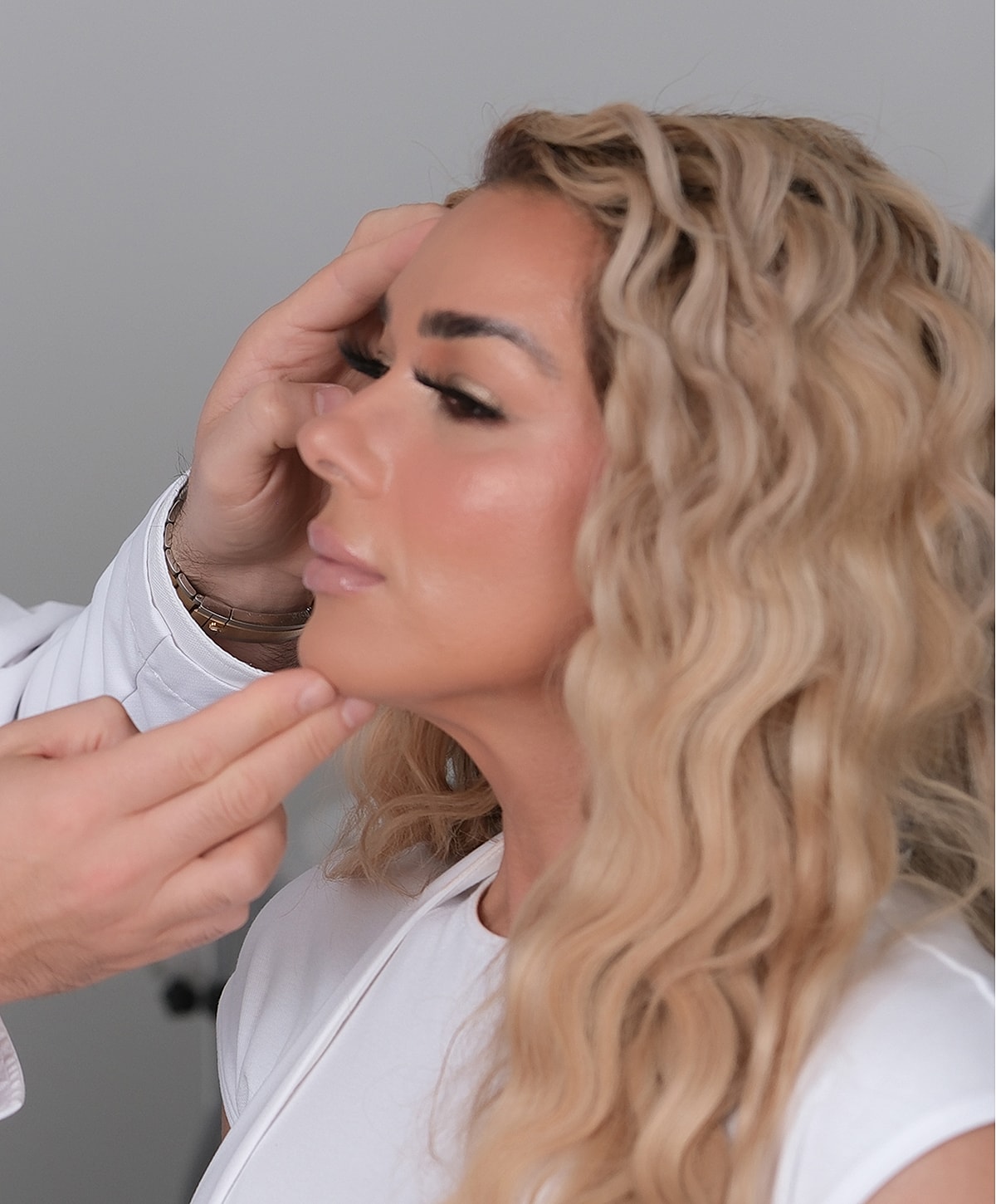
On the day of your rhinoplasty Newport Beach patients will have it performed under general anesthesia in a fully accredited surgical setting. Dr. Compoginis uses either an open or closed approach depending on your anatomy and goals.
Incisions are carefully placed to allow access to the underlying nasal structures. Bone and cartilage are then sculpted with precision to achieve the desired contour, whether refining the bridge, reshaping the tip, or improving symmetry. Once complete, the nose is supported with internal structure adjustments and an external splint.
Patients return home the same day with detailed aftercare instructions to support a smooth recovery.

Common concerns included the following:

Create harmony between your nose and surrounding features for a more proportionate appearance.
Smooth the bridge, refine the tip, and create cleaner, more elegant contours.
Correct structural concerns that may impact airflow and overall nasal function.
Rhinoplasty delivers results that evolve beautifully over time and remain stable for years to come.
Rhinoplasty focuses on the nose, including the bridge, tip, nostrils, and internal nasal structures, enhancing both appearance and overall facial harmony.
Rhinoplasty stays focused on the nose and how it fits with the rest of your features. If your concerns are more related to aging through the cheeks, jawline, or lower face, facelift surgery addresses those areas more directly.
One of the decisions Dr. Compoginis makes when planning rhinoplasty is how to access the structures that need to be reshaped. Rhinoplasty can be performed using an open or closed technique, and both can produce beautiful, natural-looking results. The difference is really about how much access is needed to make the changes you’re looking for.
With open rhinoplasty, Dr. Compoginis makes small incisions inside the nostrils along with a short incision across the columella, the strip of skin between them. This allows him to gently lift the skin and get a clear look at the cartilage, bone, and other structures underneath. That extra visibility can be especially helpful when the nose needs more detailed reshaping, such as significant tip refinement, correction of asymmetry, or more involved structural work. The small external incision is placed carefully and typically becomes very difficult to notice once it has healed.
With closed rhinoplasty, all of the incisions are made inside the nostrils. There’s no external incision, and Dr. Compoginis reshapes the nose through those internal openings. For some patients, that gives him all the access he needs. It may make sense when the changes are more limited or when the areas being treated can be reached effectively without opening the nose.
The important thing is that you don’t need to decide which technique is “better” before your consultation. Dr. Compoginis looks at the shape and structure of your nose, talks with you about what you want to change, and then chooses the approach that gives him the best access to make those changes precisely.
Most people first hear about rhinoplasty as a cosmetic procedure, but appearance is only part of what the nose does. Its internal structure also affects how easily air can move through it. If that structure is narrow, uneven, or has been changed by an injury, you may notice that breathing through your nose feels more difficult than it should.
That’s where functional rhinoplasty comes in. Instead of focusing only on how the nose looks, functional rhinoplasty addresses structural issues that may be interfering with airflow. Sometimes breathing is the main reason someone considers surgery. Other patients want to improve breathing while also making changes to the size, shape, or proportions of their nose.
Dr. Compoginis considers both sides when planning surgery. If you have trouble breathing through your nose, that becomes part of the discussion alongside any cosmetic changes you’d like to make. The goal is a nose that feels balanced with the rest of your face while also supporting healthy nasal function.
You may be a good candidate for Rhinoplasty in Newport Beach if you:
A personalized consultation with Dr. Compoginis ensures your goals are clearly understood and achievable.
There isn’t one set price for rhinoplasty because the operation itself can look very different from one patient to the next. Someone who needs a relatively small change to the bridge may have a very different surgical plan from someone who wants tip refinement, structural correction, or improvements to both appearance and breathing.
Your cost will depend on what Dr. Compoginis needs to do to create the result you’ve discussed together, along with factors related to the surgery itself. During your consultation, he’ll examine your nose, talk through your goals, and put together a surgical plan based on your anatomy. Once that plan is clear, the practice can give you a personalized cost estimate and review available payment and financing options.
Recovery from rhinoplasty is a gradual process, with improvements unfolding over time.
Patients are advised to avoid strenuous activity, protect the nose from impact, and follow all post-operative instructions carefully for optimal healing.
Rhinoplasty results are both immediate and evolving. While initial improvements are visible once swelling subsides, the final shape of the nose continues to refine over several months as tissues heal and settle.
The outcome is a nose that feels naturally yours: balanced, proportionate, and in harmony with your facial features. Patients often find that even subtle changes can make a significant difference in their overall appearance and confidence.
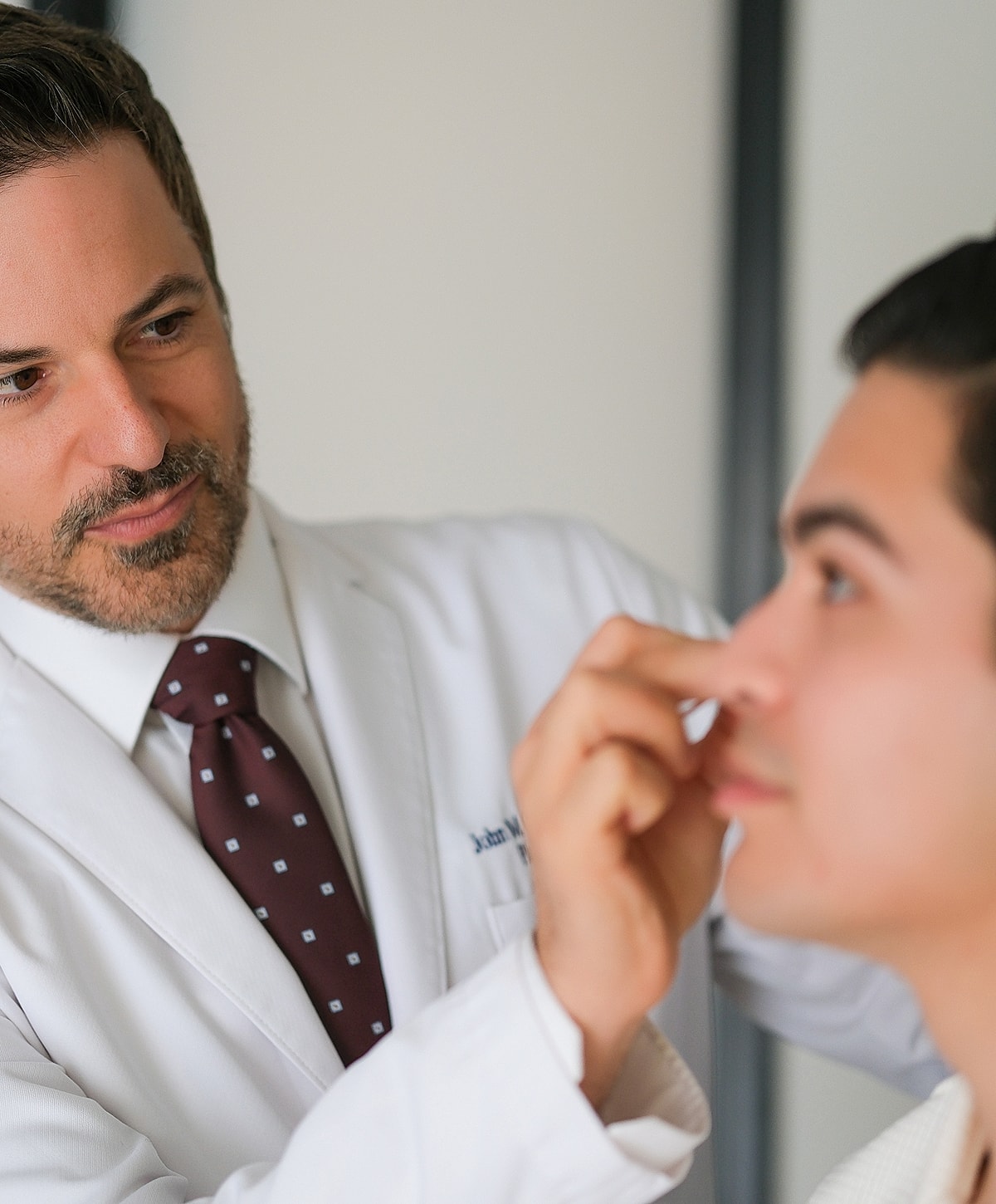
Rhinoplasty is widely considered one of the most technically demanding procedures in plastic surgery. It requires not only surgical expertise but a refined artistic perspective.
Dr. Compoginis approaches each rhinoplasty as a sculptural process, meticulously shaping structure while preserving natural character. As a double board-certified plastic surgeon with advanced training and a commitment to innovation, he delivers results that are elegant, balanced, and uniquely tailored to you.
From consultation through recovery, patients receive a high-touch, personalized experience designed to ensure comfort, clarity, and exceptional outcomes.
Most procedures take between 2–3 hours, depending on the complexity of the case.
Initial results are visible within weeks, but final refinement can take up to a year as swelling fully resolves.
Incisions are typically well-hidden, and any external incision (in open rhinoplasty) is placed discreetly and heals with minimal visibility.
Most patients report mild to moderate discomfort, which is well-managed with prescribed medication.
Yes. Functional rhinoplasty can correct structural issues that affect airflow and breathing.
Most patients return to normal daily activities within 1–2 weeks, with continued healing over several months.

Mon- Fri: 9am - 5:00pm