Breast Reduction
Conveniently located in Los Angeles, Orange County, and the Inland Empire


Few things make a woman feel more feminine, sexier, and beautiful than attractive breasts. Breasts that are natural-looking and proportionate for the individual can profoundly impact a woman’s self-confidence. This is why board-certified plastic surgeon Dr. John Compoginis offers breast reduction in Newport Beach at Orange County Plastic Surgery.
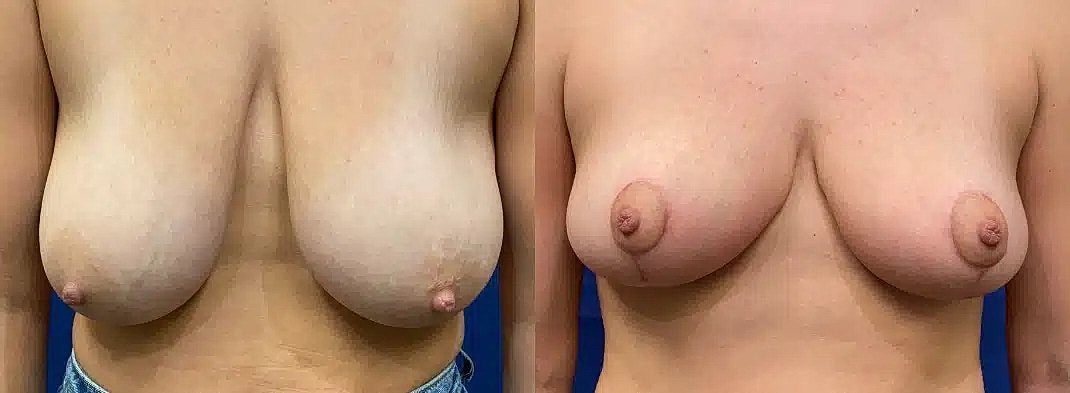
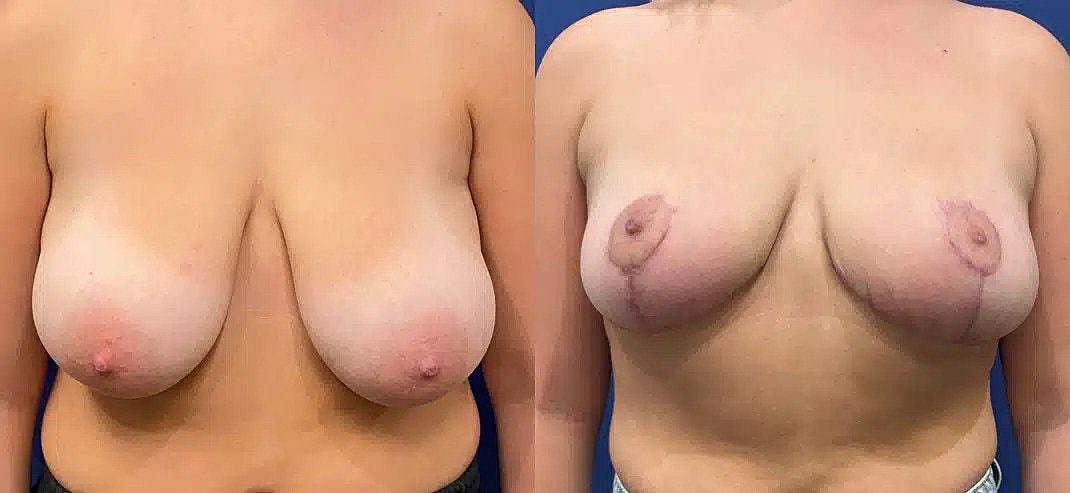
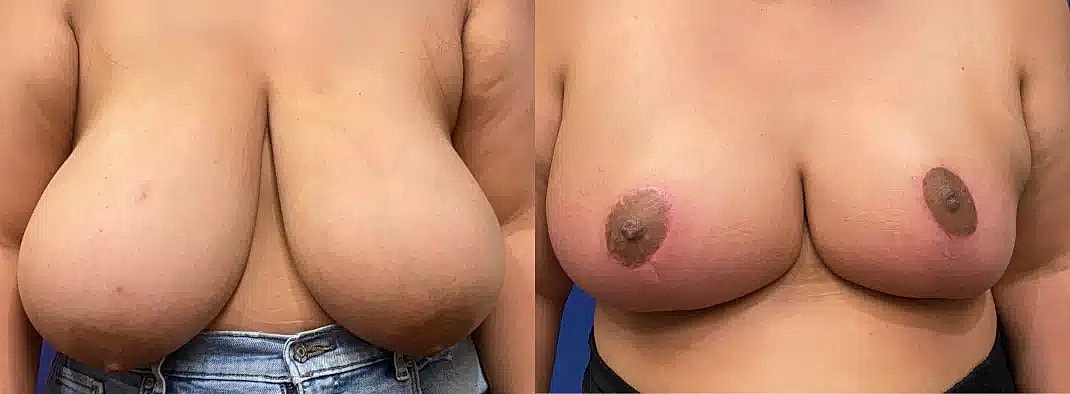
A breast reduction removes excess tissue and/or skin and tightens the surrounding tissue to reshape and support the new breast contour. With a reduction, the shape improves, and the cup size decreases, resulting in a more desirable profile. This will eliminate uncomfortable back pain, improve posture, and allow you to move more freely. Call Orange County Plastic Surgery to schedule your consultation today.
1 of 3

Surgical removal of excess breast tissue, fat, and skin
Relief from shoulder pain, neck pain, and bra strap grooving while improving breast shape
Typically performed under general anesthesia
Most patients resume light activities within 1–2 weeks
Smaller, lighter breasts with improved proportion and comfort

Breast reduction surgery is an aesthetic plastic surgery procedure designed to reduce breast size by removing excess glandular tissue, fatty tissue, and skin. The goal is to create breasts that are more proportional to the patient’s body and alleviate physical discomfort caused by large breasts.
During reduction mammaplasty, Dr. Compoginis will reposition the nipple and areola and remove excess breast tissue to reshape the breasts into a lifted, natural contour. In many cases, our Newport Beach breast reduction also produces results similar to a breast lift, improving breast shape while decreasing breast volume.
This procedure can significantly improve the quality of life for patients who experience physical discomfort, difficulty exercising, or challenges finding properly fitting clothing due to large breasts.

For a breast reduction Newport Beach patients typically have it performed as an outpatient procedure under general anesthesia.
On the day of surgery, Dr. Compoginis begins by making carefully planned incisions tailored to your anatomy and the amount of tissue to be removed. Through these incisions, excess breast tissue, fat, and skin are removed, and the remaining tissue is reshaped to create smaller, lifted breasts.
The nipple and areola are repositioned to maintain a natural breast appearance, and the surrounding skin is tightened to support the new contour. Surgical techniques, such as the inferior pedicle technique, may be used to preserve the blood supply and breast sensation.
Once the breasts are reshaped, incisions are closed, and a surgical bra is placed to support the healing process.

Undergoing breast reduction surgery can help address a variety of physical symptoms caused by excess breast tissue, including:
By reducing breast size and weight, the procedure helps alleviate these symptoms while restoring a more balanced silhouette.
Breast reduction in Newport Beach offers both physical and aesthetic benefits for many patients.
Removing excess tissue reduces strain on the shoulders, neck, and back, helping alleviate chronic pain caused by heavy breasts.
Many patients find it easier to participate in exercise and physical activities after breast reduction surgery.
In addition to making the breasts smaller, the procedure lifts and reshapes them for a more youthful breast contour.
Smaller breasts often make it easier to find supportive bras and clothing that fits comfortably.
Patients frequently report a boost in self-confidence after surgery as their body proportions feel more balanced.
Breast reduction focuses on reshaping the breasts and the surrounding chest contour. By reducing excess breast tissue and adjusting nipple position, the procedure creates a more balanced relationship among the breasts, the chest wall, and the torso.
You may be a good candidate for breast reduction if you:
During your consultation, Dr. Compoginis will review your medical history, anatomy, and goals to determine whether breast reduction surgery is the best option for you.
The incision pattern Dr. Compoginis uses depends on your breast size, the amount of tissue and skin being removed, and how much lifting is needed. An anchor or inverted-T reduction uses an incision around the areola, down the lower breast, and along the breast crease. This approach gives Dr. Compoginis more access when a larger reduction or more significant reshaping is needed.
A vertical or lollipop reduction uses an incision around the areola and down the lower breast without the longer incision along the crease. For smaller reductions or more limited reshaping, a periareolar incision around the areola may be an option for select patients. Liposuction can also be used in some cases to reduce fatty tissue or refine the outer breast and chest contour.
The technique is chosen around your anatomy rather than using the same incision for everyone. If breast reduction is one part of a broader plan to address changes after pregnancy, it can also be incorporated into a customized Mommy Makeover.
Breast reduction and breast lift surgery both reshape the breasts, but they solve different problems. A breast reduction removes breast tissue, fat, and skin to make heavy breasts smaller and lighter. A breast lift mainly removes excess skin and repositions the breast when sagging is the primary concern.
Most breast reductions also include some lifting and reshaping because the nipple and breast tissue need to be repositioned after volume is removed. If you like your breast size but want a higher, firmer shape, a lift alone may be enough. If breast weight and volume are causing discomfort or feel out of proportion with your frame, a reduction may make more sense.
The recovery process following breast reduction surgery typically involves several stages.
Most patients wear a surgical bra for support during the initial healing period. Swelling and mild discomfort are common during the first week and are usually manageable with prescribed pain medication.
Patients are encouraged to limit strenuous physical activity for several weeks, while light activities can usually resume within 1 to 2 weeks. As swelling subsides and tissues settle, the new breast shape becomes more visible. Follow-up appointments allow Dr. Compoginis to monitor the healing process and ensure optimal results.

Breast reduction results are typically visible immediately after surgery, though swelling may temporarily obscure the final contour. As healing progresses over the following weeks and months, the breasts settle into a more natural shape.
Patients often notice significant improvements in physical comfort, posture, and mobility. Smaller, lighter breasts reduce strain on the neck, shoulders, and back while creating a more balanced silhouette. With proper care and a stable weight, breast reduction results are long-lasting. Many patients experience lasting improvements in both their physical comfort and overall quality of life.

Breast reduction is surgery and has risks such as bleeding, infection, reactions to anesthesia, delayed healing, scarring, asymmetry, and changes in breast or nipple sensation. Removing and reshaping breast tissue can also affect the ability to breastfeed in the future. Dr. Compoginis will review the risks that apply to your health, anatomy, and surgical plan before you decide to move forward.
Breast reduction cost varies depending on how much tissue needs to be removed, the incision and surgical technique used, and the overall complexity of your procedure. Liposuction or other procedures performed at the same time can also affect the total cost. After Dr. Compoginis examines your breasts and discusses your goals, the practice can provide a personalized cost estimate based on your surgical plan.
Some health insurance plans may cover breast reduction when it is considered medically necessary rather than purely cosmetic. Requirements vary by insurer, but coverage may depend on documented symptoms such as chronic neck, shoulder, or back pain, skin irritation, bra strap grooving, or limitations on physical activity.
Your insurance provider may also require medical records or other documentation showing how large breasts are affecting your health and daily life. Because every policy is different, coverage cannot be guaranteed. If insurance may apply to your procedure, the team can help guide you through the process.
Choosing the right board-certified plastic surgeon is essential when considering breast reduction surgery. Dr. John M. Compoginis is known for his meticulous plastic and reconstructive surgery technique, personalized treatment planning, and commitment to patient safety. Every procedure is carefully tailored to the patient’s anatomy and goals, ensuring natural-looking results that improve both comfort and proportion.
At John M. Compoginis, MD, Plastic & Cosmetic Surgery, patients receive attentive care from consultation through recovery, helping them feel informed, confident, and supported throughout their surgical journey.
All surgical procedures create some scarring, but Dr. Compoginis carefully places incisions to minimize visibility. Over time, most surgical scars fade significantly.
Most patients return to light activities within 1–2 weeks, while more strenuous physical activities should be avoided for several weeks to allow proper healing.
Temporary changes in breast sensation are possible, but modern surgical techniques are designed to preserve nerve supply whenever possible.
Can breast reduction improve posture and pain?
Yes. By reducing breast weight, many patients experience significant relief from shoulder pain, neck pain, and bra strap grooving.
Temporary changes in breast sensation are possible, but modern surgical techniques are designed to preserve nerve supply whenever possible.
Some patients can breastfeed after breast reduction, but the surgery can affect milk ducts, nerves, and glandular tissue involved in milk production. Your ability to breastfeed afterward depends partly on your anatomy and the surgical technique used. If future breastfeeding is important to you, discuss it with Dr. Compoginis during your consultation so it can be considered when planning your procedure.

Mon- Fri: 9am - 5:00pm